Why Concrete Cracks and How Control Joints Steer It
Every slab cracks sooner or later. The cuts in it decide where, and the base, the mix and the finish decide how soon. Here is which cracks are normal and which ones need a repair.
Not sure about a crack? We come out and look, and the estimate is free.
The short answer
Why concrete cracks
Concrete shrinks as it cures and moves with heat, cold and frost, so any slab can crack, and every slab eventually will; the only questions are where and how soon.
A slab loses water and pulls in on itself in its first days, then swells and shrinks with the seasons for the rest of its life. Clay ground that heaves in a freeze pushes it around on top of that. All concrete cracks in the end, but a slab on a poor base cracks much sooner.
While it cures
It shrinks as the water leaves it
Through the seasons
It grows in heat and shrinks in cold
Every winter
Frost heaves the ground under it
Steering the crack
What control joints do
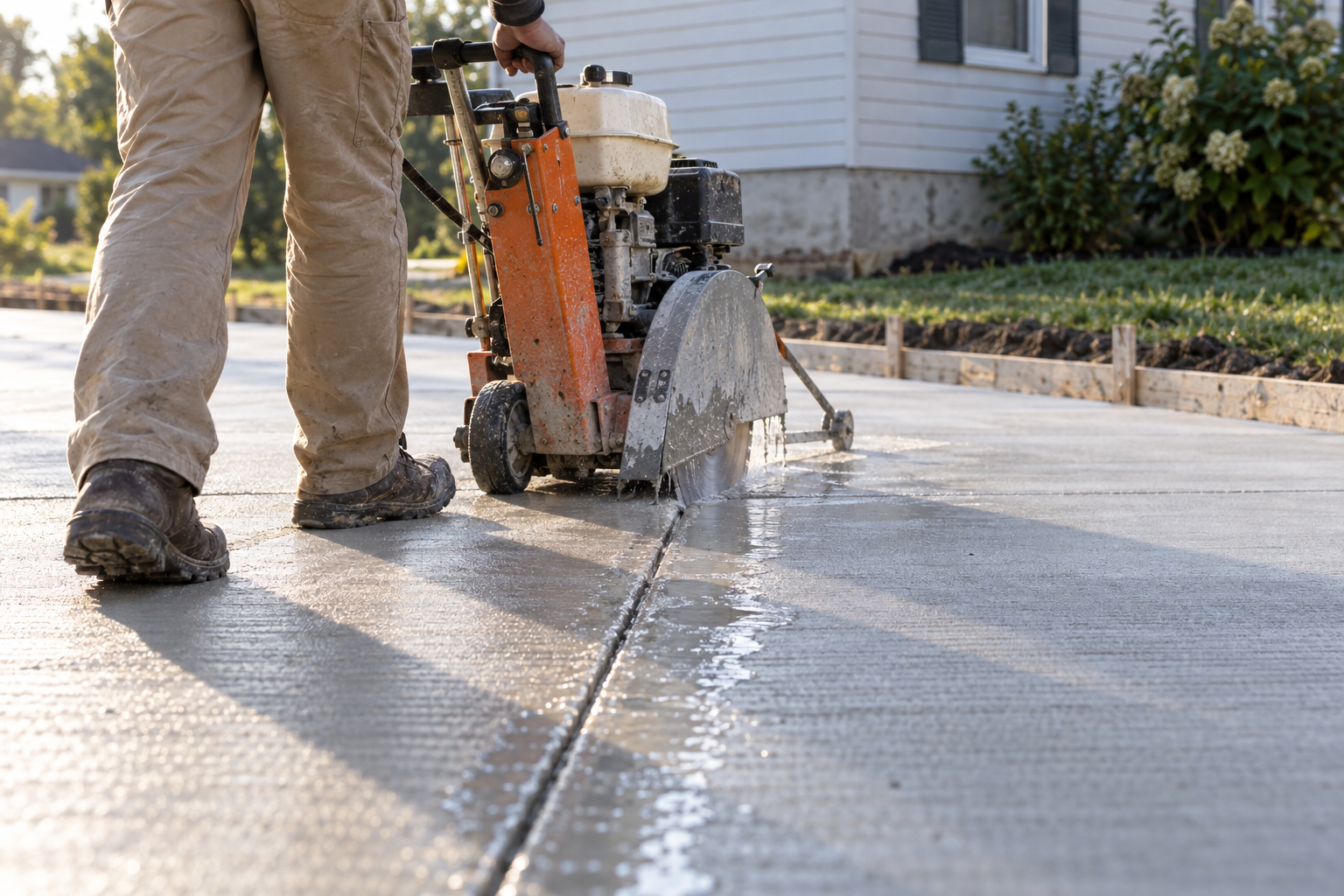
Control joints are cut into the slab so it cracks in a straight line at the joint instead of wandering across the surface at random.
A "control joint" is one of the seams, cut lines or grooves you see across a driveway or walk. Cutting it makes the slab thinner along that line, so when the concrete shrinks, the crack forms down in the cut where you hardly see it. On a properly installed driveway the joints go in while the concrete is still green, saw-cut to about a quarter of the slab's depth.
An "isolation joint" does a different job. It is the gap at the house, the "expansion joint" some people call it, and it lets a slab float free of the house, the stoop and the garage slab instead of locking onto them.
Control joint
Seams, cut lines, grooves
Isolation joint
Expansion joint, the gap at the house
Joint layout
Joint spacing and timing
On a four-inch slab, joints go 8 to 10 feet apart and are cut 6 to 18 hours after the pour.
8 to 10 ft8 to 10 ft
Spacing
8 to 10 ft apart
When it is cut
6 to 18 hours after the pour
How deep
About a quarter of the slab
The joints run in a grid laid out to look intentional, and we plan the spacing and the timing before the concrete is ordered, not on the day.
Cracking early
What makes cracks come early
Poor base work, extra water added at the truck and finishing over bleed water can all bring cracks and flaking sooner. Here are the causes of early cracking, one per line.
A poor base
The "base course" is the compacted gravel under the slab, and its depth depends on what the dig turns up; a slab on a poor base cracks much sooner.
Water at the truck
Adding water at the truck makes concrete easier to place, but it weakens the slab you live with afterward.
Finishing too soon
Finishing the surface while bleed water is still on it is a leading cause of "scaling", the flaking and pitting that shows up later.
Slope by eye
Grade stakes set the slope so water runs off the slab, instead of copying the old slab by eye and keeping its low spots.
Mix and finishing practice is what the American Concrete Institute (ACI) writes standards for. We settle the base, the slope and the joints on the estimate visit, before any concrete is ordered.
We look at the crack and tell you plainly whether it needs anything.
Usually normal
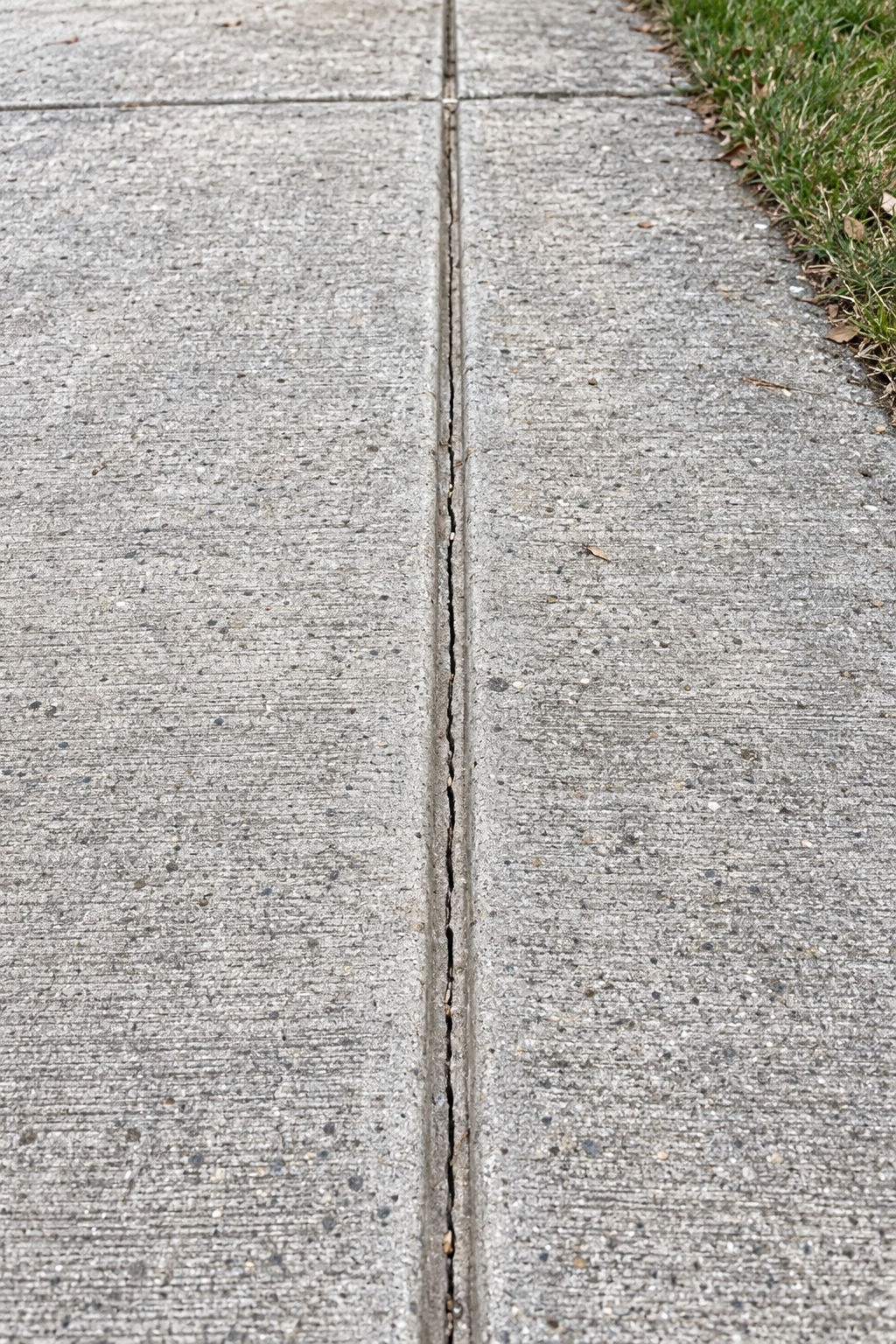
Cracks along joints
A crack that follows a saw-cut joint is the joint working as designed. The slab cracked where it was told to, down in the cut, and it needs nothing unless it starts to widen or one side drops.
Needs a repair
Fixing wider cracks
Wider or moving cracks are saw-cut and patched, or the panel is replaced, once we find what is moving them. Repair edges are saw-cut to clean vertical faces and never feathered thin, so the patch has a solid edge to hold.
Our Google reviews, as written by the people who left them.
Sophisticated Concrete did a fantastic job on my driveway! The team was on time and professional, completing the project exactly as promised. The quality of their work was impeccable, and they offered great prices too. I am extremely satisfied with the outcome and would highly recommend them to anyone in need of concrete services. Great work Mike I will definitely be recommended you with all friends and family’s !!
Yosi ZaragozaGoogle review
I recently had the pleasure of working with Sophisticated Concrete for my driveway and side walks, and I couldn't be happier with the results. They did an amazing job, exceeding all my expectations. The team was incredibly punctual, arriving right on time and completing everything perfectly. Not only was the workmanship top-notch, but their prices were also very reasonable. I highly recommend Sophisticated Concrete for anyone looking for high-quality concrete work. Thank you so much Mike it was a pleasure.
luke martinezGoogle review
Great work, very detailed and great price. I would recommend to anyone looking to get concrete work done!!! Great company overall.
Tyler ColonGoogle review
Worried About a Crack? Have Us Look.
Tell us where it is and what it is doing. We come out, read the crack and tell you whether it needs a repair, then quote the whole job before any work starts.