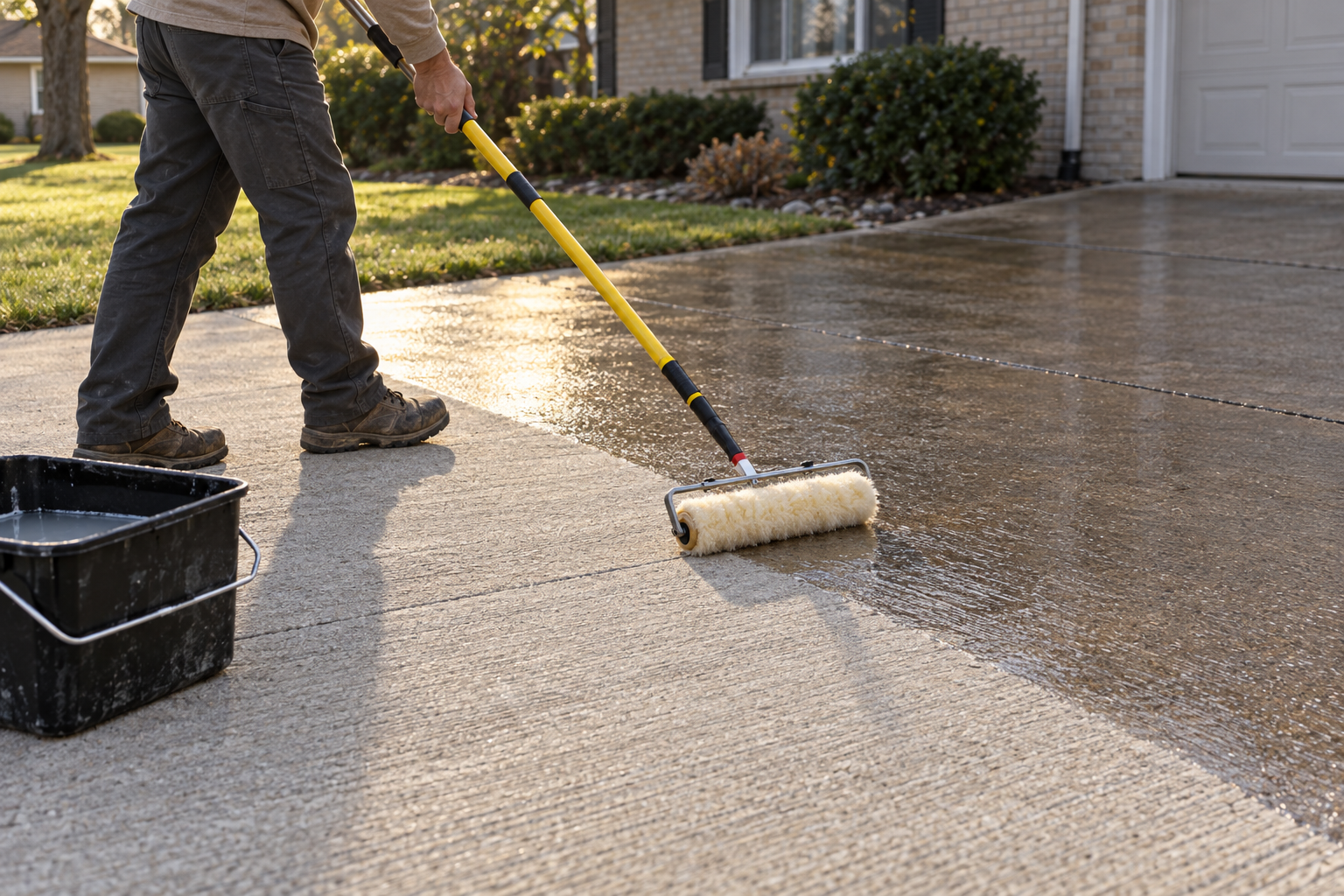
sealing concrete on a clean driveway

Sealing and salt

Sealing Concrete: When to Do It and What Salt Does Without It

Salt and freezing water flake the top off bare concrete a little more every winter. Sealer slows that down, as long as it is renewed every few years.

Free, no-obligation estimates. We answer the phone or call back the same working day.

The short answer

Why outdoor concrete is sealed

You should seal outdoor concrete that gets wet, freezes and sees de-icing salt, because a sealer slows the surface damage that salt and ice do to it.

Around here that is most driveways, front walks, stoops and the patio by the back door. A sealed surface soaks up less of the salty meltwater that breaks the top down, though no sealer makes concrete salt-proof, so it works best alongside the habits further down this page.

Seal it when it sees

  • Rain and snowmelt that freeze on it
  • De-icing salt, yours or tracked in from the street
  • Foot and car traffic all winter
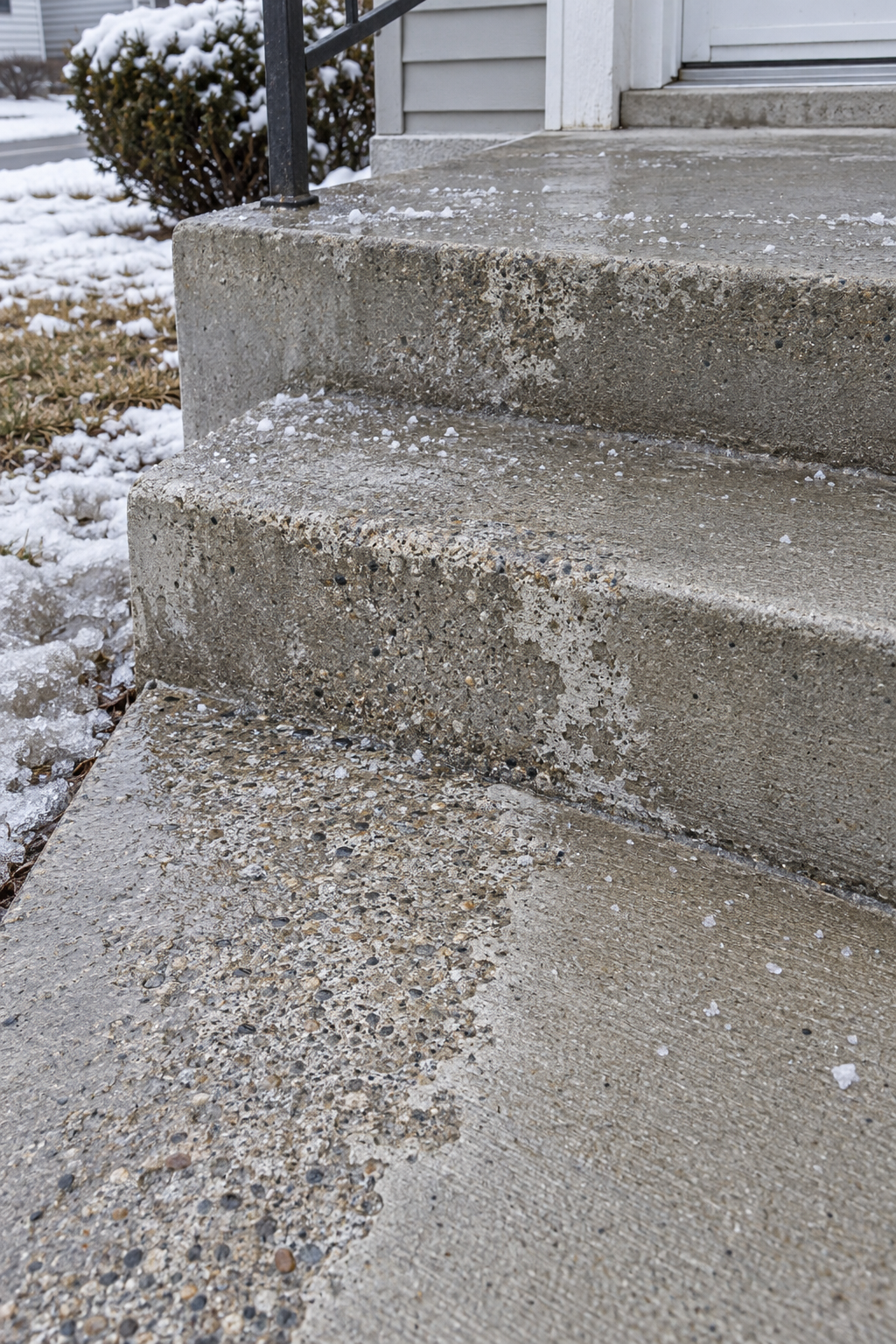
Close view of a concrete step whose top layer has flaked away in patches beside scattered de-icing salt

Salt and scaling

What salt does to concrete

De-icing salt can keep the top of the slab wet and freezing over and over, and each freeze may pop off a little more of the surface paste; the trade calls that flaking "scaling".

It starts as a rough, sandy patch where the smooth finish used to be, then turns to pitting with the stone showing through. Driveway aprons, the path to the door and the steps go first, because that is where the salt lands and the meltwater sits.

Scaling happens the same way every winter:

  1. Salt makes brine

    Melted snow carries the salt down into the pores of the surface paste.

  2. The brine freezes

    Water grows as it turns to ice and pushes on the paste from inside.

  3. The top flakes off

    Thaw after thaw, thin flakes break away and leave a pitted, sandy face.

Besides sealer

Air-entrained concrete and drainage

An air-entrained mix, a slope that sheds water and sealed joints protect outdoor concrete along with the sealer, and the mix and the slope are set the day the slab is poured.

What protects exterior concrete, one layer at a time:

  • An air-entrained mix

    Our exterior slabs are poured with a 4,000 psi "air-entrained" mix, the winter-grade concrete the Portland Cement Association describes for freeze-thaw exposure, with tiny air pockets that give freezing water room.

  • A slope that sheds water

    A slab pitched away from the house drains meltwater off instead of letting it pond, soak in and freeze in place.

  • Joints, sealed

    Control joints, the "cut lines" in a slab, steer its cracks; sealing them keeps water from running down into the base where frost can heave it.

  • The sealer itself

    A sealed surface takes in less salty water, as long as the coat is renewed before it wears through.

The mix and the slope come with the slab you have. Joints and sealer can be fixed on it, and we can tell you which it needs.

Call Sophisticated Concrete

Resealing

How often to reseal

Outdoor concrete can usually go every few years between coats of sealer, though it may need one sooner on a driveway or walk that is salted and walked or driven on all winter.

Sealer wears off where the traffic goes, so the apron and the path to the door lose it first. An easy check: splash water on the slab. If it sits on top, the sealer is still working; if it soaks in and darkens the concrete, the coat has worn through.

Reseal on clean, dry concrete in mild weather, so it has time to dry before the first hard freeze and the first salt.

Call for an Estimate

We look at the slab and tell you whether it needs sealer, repair or both.

Reseal outdoor concrete

Every few years

Sooner where salt and traffic wear it down

Salted driveway and apron
Sooner
Front walk and stoop
Sooner
Back patio, little salt
Later
Water soaks in and darkens it
Due now

Next to sealing

More sealing questions

Two more questions sit right beside sealing: what to put down instead of salt, and what to do about a surface that has already flaked.

  • Traction without salt

    You should use sand: it gives you grip on the ice without the scaling that de-icing salt causes over time.

    Sand melts nothing, so shovel first and spread it on what is left. On new concrete, or on a slab that has started to flake, sand is the safer choice all winter.

  • Restoring a scaled surface

    A scaled surface on a sound slab is restored with a polymer-modified "overlay" bonded to the old concrete, then finished and sealed.

    An overlay only holds on solid concrete, so the slab is checked for hollow spots and moving cracks first. A slab broken through needs repair or replacing instead.

    concrete resurfacing

Not sure whether your slab can be saved? We come out and look.Call Sophisticated Concrete

Google reviews

Neighbors on Our Work

Our Google reviews, as the people who left them wrote them.

Sophisticated Concrete did a fantastic job on my driveway! The team was on time and professional, completing the project exactly as promised. The quality of their work was impeccable, and they offered great prices too. I am extremely satisfied with the outcome and would highly recommend them to anyone in need of concrete services. Great work Mike I will definitely be recommended you with all friends and family’s !!
Yosi ZaragozaGoogle review
I recently had the pleasure of working with Sophisticated Concrete for my driveway and side walks, and I couldn't be happier with the results. They did an amazing job, exceeding all my expectations. The team was incredibly punctual, arriving right on time and completing everything perfectly. Not only was the workmanship top-notch, but their prices were also very reasonable. I highly recommend Sophisticated Concrete for anyone looking for high-quality concrete work. Thank you so much Mike it was a pleasure.
luke martinezGoogle review
Great work, very detailed and great price. I would recommend to anyone looking to get concrete work done!!! Great company overall.
Tyler ColonGoogle review

Salt Already Getting to Your Concrete?

Call and tell us what the slab looks like. We come out, tell you whether it needs sealer, repair or an overlay, and quote the whole job before we start.

Free, no-obligation estimates, and we show up when we say we will.

Call (262) 583-6057